Ricettario, manuale per cake designers, diario personale: entrare in questo blog è come fare un tuffo in un mare di dolcezza!
Visualizzazione post con etichetta castagne. Mostra tutti i post
domenica 14 dicembre 2014
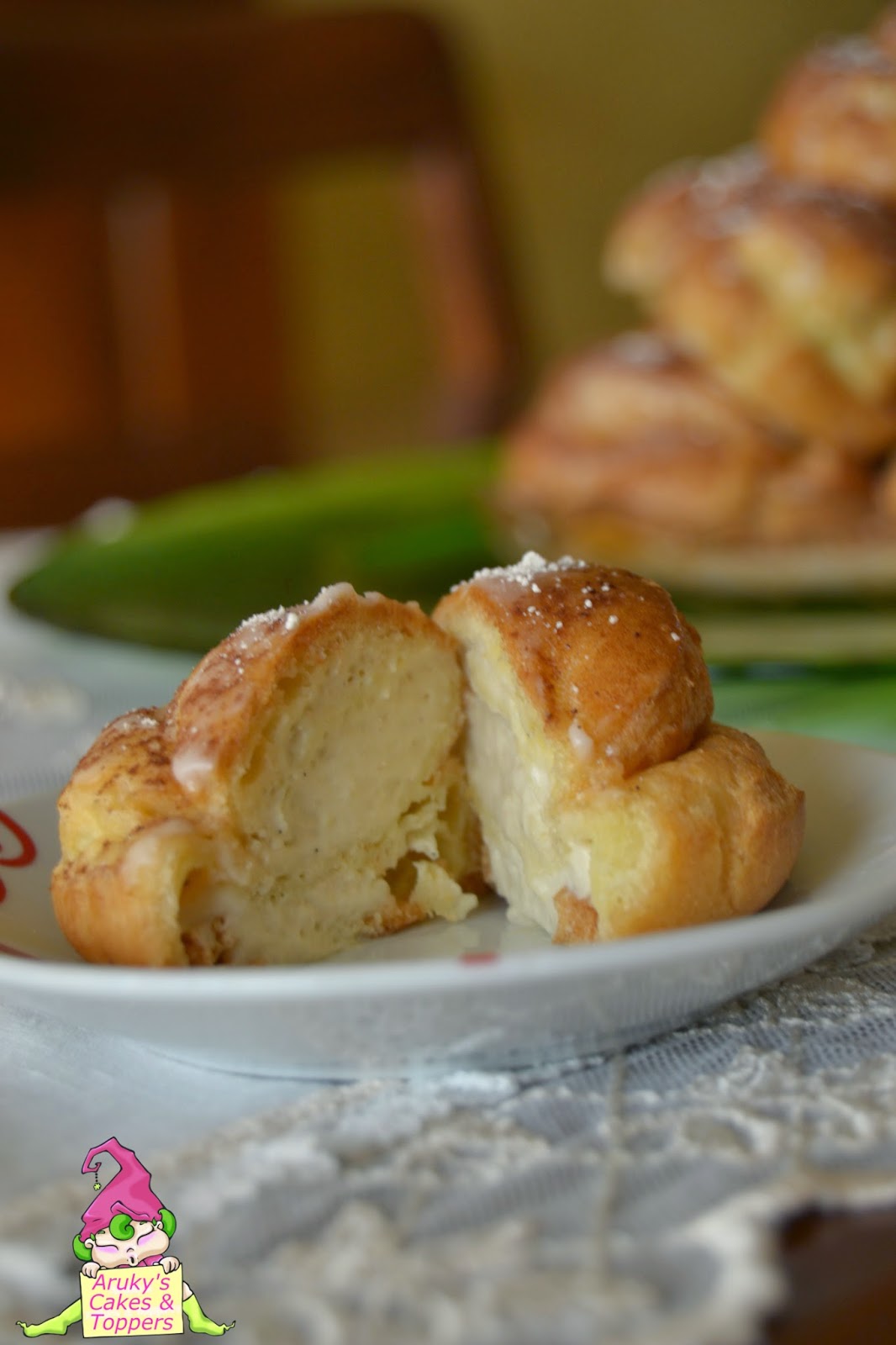
Bigné Marron glacé
Dopo aver sperimentato non una, non due, ma ben tre ricette di pasta choux non potevo non proporre un dolce che ne facesse utilizzo.
Per fortuna i profiteroles sono davvero molto versatili e possono essere farciti come meglio si crede.
Non volendo fare i soliti, classici profiteroles ripieni di panna o crema con la glassa al cioccolato, ho voluto improvvisare ed ispirandomi al periodo invernale, ho creato una ricetta di sana pianta.
Come prima prova devo dire che il risultato è stato soddisfacente perchè il mio intento di fare un dolce a base di castagne e allo stesso tempo leggero è riuscito alla grande e come hanno giustamente notato i miei assaggiatori - cavie, l'aspetto ricorda proprio dei marron glacé.
Ma passiamo alla ricetta...
Per circa 35-40 profitteroles medi (per la base choux ho usato la ricetta di Montersino descritta qui)
Per la marmellata di marroni
240 g di purea di castagne precedentemente mondate, bollite e scolate
40 g di acqua
80 g di zucchero
40 g di acqua
1/2 bacca di vaniglia
Per la crema di marroni
300 g di crema pasticcera soda aromatizzata alla vaniglia
400 g di marmellata di marroni
300 ml di panna fresca
Per la glassa
zucchero al velo
acqua q.b.
Procedimento
Per la marmellata di marroni.
*La purea di castagne si ottiene partendo dalle castagne fresche che vanno incise lungo la circonferenza, messe in ammollo in acqua fredda per un'ora e mezza e poi bollite per circa mezz'ora. Dopodichè, si mondano dalla scorza e dalla buccia e con il passa verdure o lo schiacciapatate si trasformano in purea.*
Aggiungete 40 g di acqua alla purea per ammorbidirla.
Mettete l'acqua e lo zucchero in una pentola dal bordo alto e fate caramellare senza mescolare (io ho lasciato andare fino ad ottenere un caramello biondo medio-scuro).
Fuori dal fuoco aggiungete amalgamando la purea di castagne poco per volta e quando tutto sarà ben miscelato rimettere sul fuoco per una decina di minuti e aggiungere i semi della bacca di vaniglia. (Se la purea di castagne non è abbastanza fine, si può raffinare con il mixer ad immersione)
La marmellata avrà la consistenza finale di una crema spalmabile.
Per la crema di marroni
Scegliete la vostra ricetta preferita di crema pasticciera abbastanza soda e poco morbida.
Se è fredda lavoratela un po' prima di utilizzarla per evitare grumi.
Aggiungete la marmellata di castagne e mescolate bene.
Montate la panna e con la spatola aggiungetene prima 1/3 al composto e infine gli altri 2/3 cercando di non smontarla.
Riempite la sac à poche e farcite i bigné.
Per la glassa
In una ciotola mettete lo zucchero al velo e aggiungete poco alla volta dei cucchiai di acqua calda a piacere fino a ottenere la consistenza desiderata.
Intingete la testa dei bigné nella glassa e sistemateli in un piatto da portata.
Lasciate asciugare la glassa e spolverizzate col cacao amaro.
I vostri bigné marron-glacé sono pronti per essere gustati!
Bon apétit!
^^
Profiteroles Marron-glacé
After three trials with different choux pastry's recipes I had some profiteroles that were asking me: "please, make a dessert with us".
So I thought to something different from the usual chocolate topping with cream stuffing and I was inspired by the cool autumn and its products.
Honestly I have to say that what I created it's just what I wanted to obtain: a perfect balance between chesnut's flavour and a profiterole's lightness and they look like a marron glacé also.
The recipe is very simple, but it requires time for cooking the chestnuts.
For about 35-40 profiteroles (for choux pastry I used Chef Montersino's recipe...here)
For the chestnuts jam
240 g of chestnuts purée (I explain how to make it below)
40 g of water
80 g of sugar
40 g of water
1/2 of vanilla berry
For the chestnuts cream
300 g of vanilla flavoured custard
400 g of chestnuts jam
300 ml of fresh cream, whipped
For the icing
icing sugar
water
as required
Directions
*To make Chestnuts purée starting from fresh chestnuts you need to cut chestnuts' external peel all around, leave them in a bowl with cold water for an hour and half, drain them and boil in fresh water for about 30 mins. Finally you carefully and patiently have to peel them from the two skins.
Once you have perfect clean and boiled chestnuts, mash them and try to obtain a thin and fine purée.*
Stir 40 g of water into the purée and set aside.
In a pan put the remaining sugar with water and bring to boil without blending and cook until you have a golden syrup (do not burn it otherwise it will taste bitter)
Gradually add the chestnuts purée and stir. Once it is well blended, cook for about 10 mins again and add the vanilla seeds. If the purée is too much grainy, then refine it using a mixer.
The final consistency of the jam should be creamy and easy to spread.
Choose your favorite custard recipe (it should be compact and not too much soft)
If it's cold, blend it enough to avoid grains.
Add the chestnuts jam and stir well.
Whip the cream a part and then add 1/3 of the cream to the mixture and finally the remaining 2/3 trying to keep it as much whipped as you can.
Fill in the profiteroles with this cream.
Put the icing sugar in a bowl and gradually add some tbsp of water until you have the desired consistency.
Dip the profiteroles into the icing and place in a plate.
Once the icing is dry, sprinkle with unsweetened cocoa powder.
Your profiterols marron-glacé are ready to be tasted!
Bon apétit!
^^
mercoledì 26 febbraio 2014
Le montblanc!
Per chi come me ha avuto la fortuna di assaggiare questo dolce direttamente da "Angelina" a Parigi, comprenderà il perchè abbia avuto l'ardita sfrontatezza di provare a farlo.
Ma che ci si può fare? In fondo quando si è amanti dei dolci e degli esperimenti, non si può non provare a fare tutte le ricette dolci assaggiate, specie quelle che ci hanno colpiti.
Il Montbanc nella nota pasticceria di Parigi viene servito monoporzione, diciamo delle dimensioni di un muffin (tra l'altro carinissimo a vedersi), e oltre alla panna e alla purea di castagne, c'è una meravigliosa meringa alla base che decisamente dà quel "je ne sais quoi" al dolce.Ebbene, essendo in vena di esperimenti, ho abbastanza improvvisato nella preparazione.
Non avendo idea su come fare la purea di castagne, mi sono ispirata alla ricetta di giallo zafferano, anche se alla fine con le porzioni ho fatto di testa mia...come sempre!
Ecco la ricetta per 5 mini Montblanc:
Ingredienti
200 ml di panna fresca
3 cucchiai di zucchero
5 marron glacé per decorare
Per la meringa francese:
1 albume medio-piccolo (circa 36 gr)
36 gr di zucchero
36 gr di zucchero al velo
Per la purea di castagne
1 manciata di castagne grandi (circa 15)
latte q.b. (circa il doppio del volume delle castagne)
100 g di zucchero
1 cucchiaio di cacao
1 bustina di vanillina
1 bicchierino di ruhm
Procedimento:
Per le meringhette. Io ho scelto la ricetta della meringa francese che non prevede la cottura dello zucchero e che ha una consistenza croccante, ma delicata e areosa come una mousse.
Si comincia a battere l'albume e, quando inizia a montare, si incorpora lo zucchero gradualmente. Una volta che il bianco è a neve ferma e lo zucchero è stato incorporato, si completa la meringa aggiungendo lo zucchero al velo con una spatola senza smontare il composto.
A questo punto con una sac-à- poche si fanno dei dischi di circa 4 cm su una placca rivestita di carta da forno.
Si infornano le meringhe a 130° in forno preriscaldato per circa 30' e poi si abbassa la temperatura a 90° e si cuoce per altri 15' tenendo il forno leggermente aperto. I tempi e le temperature sono variabili e dipendono dal vostro forno. Le meringhe devono risultare ben cotte e chiare quindi se cominciano a scurirsi, regolate di conseguenza il termostato.
Per la purea di castagne. Si elimina il guscio e si mettono in una casseruola ricoperte d'acqua. Si fanno bollire per 10', dopodiché si elimina la buccia e si puliscono per bene.
A questo punto le castagne insieme al latte, lo zucchero e l'aroma si rimettono sul fuoco a cuocere per 20' fino a che il latte si sarà ridotto e le castagne saranno ben cotte. Fate attenzione alla cottura, girando di tanto in tanto.
A fine cottura le castagne vanno passate al setaccio e ridotte in purea.
Si aggiunge il cacao e il ruhm e una volta che il composto sarà a temperatura ambiente, andrà messo in frigo a raffreddarsi ulteriormente.
Quando meringhe e purea saranno pronte, si monta la panna con lo zucchero.
Infine si può procedere alla composizione.
Si mette la meringa al centro, con lo schiacciapatate si crea una montagna di purea e infine con la sac a poche e una bocchetta a stella si decora con la panna. Il maron glacé lo si pone per decorazione, ma non è necessario.
I miei suggerimenti: le castagne più adatte sono quelle grandi, dolci e più carnose.
Si potrebbero aggiungere x decorare le meringhe avanzate, sbriciolandole sulla montagnetta di panna...:P
Che dire di più...ottimo!
Le Montblanc
During my visit in Paris I had the pleasure to taste one of the best dessert of the famous patisserie "Angelina".
That's why I decided to try to make it even if emulating this recipe was like a "mission impossible".
Anyway I like chestnuts, but mostly I prefer them roasted on the fire or in some desserts, typical of my region like calzoncelli di castagne. It was just when I tried the Angelina's version of Montblanc that I became addicted to Montblanc.
In this patisserie it is served like a muffin looking-like and the presence of a french meringue at the base gives that "je ne sais quoi" to the flavour.
I did not know the recipe for making "le Montblanc" and I really did not have any idea of how to make the chestnuts' filling, but I made some search and when I was certain to know the main ingredients and the method, I started to make them, following my instinct, of course. So do not be surprised if some quantities seem to be imprecise.
I made 5 mini-montblanc.
Ingredients:
200 ml of fresh cream
about 3 tbsp of sugar
marron glacé for topping
For the french meringue
1 medium egg-white (about 36 gr)
36 gr of sugar
36 gr of icing sugar, sifted
For the chestnut filling
About 15 large chesnuts
milk (about the double volume of the chesnut)
100 g of sugar
1 tbsp of cocoa powder
1 tsp of vanilla essence
1 ruhm shot
Directions:
For the meringues. I decide to make the french meringue because it does not need cooked sugar and it has a fantastic consistency: crunchy, but at the same time soft and delicate like a mousse.
In a bowl beat the egg-white and once it starts to whip, gradually add the sugar, continuing to beat until it's firmly whipped.
Pour the icing sugar over the top and gently stir with the egg-white.
Using a sac-à-poche make some disks of about 4 cm on a sheet of baking paper and bake in preheated oven at 130°C for about 30' and finish the cooking at 90°C for 15', leaving the oven lightly open. Time and temperature depend on your oven. The meringue must be of a light color and well cooked, this means that if you notice that during baking they become dark, you need to set a lower temperature.
For the filling: Remove chesynuts' external shell and put in a casserole completely covered by water. Let boil for 10 minutes, after that peel the chesnuts and put them in the casserole again with the milk, sugar and vanilla. Let boil for 20 minutes, until the milk is completely evaporated and the chesnuts are soft enough to be mashed. During the cooking, check the chesnut and add some milk if needed.
Once they are done, mash the chestnuts and add the cocoa and ruhm.
Let cool at room temperature and then put in to the fridge.
Once the meringue and the filling are finished, whip the cream with sugar.
Put the meringue in the center of a serving plate and pour the filling over it using a potato masher e creating a sort of mountain. Complete with whipped cream and a marron glacé (if you like).
My tips: Large chestnuts are the best.
Crumble the exceeding meringues grossly and pour over the top of the white mountain...it will look like falling snow and it will be tasty, too :)
giovedì 28 novembre 2013
Calzoncelli di castagne
Il Natale è una delle festività più coinvolgenti e caratteristiche dell'anno.
Quando si comincia ad avvertire l'atmosfera natalizia in mente vengono molte cose: il calore del fuoco del caminetto mentre fuori fa freddo; il rosso, l'oro, l'argento, il blu, colori che vedi ovunque mentre sei in giro alla ricerca dei regali; i canti e le melodie che ti accompagnano durante le passeggiate della domenica pomeriggio per i folkloristici mercatini; e poi loro, gli immancabili cenoni in famiglia, che insieme alle celebrazioni religiose, rappresentano l'essenza di questa festa.
Tuttavia spesso succede che a cause degli impegni e della vita frenetica da grandi si viva con meno intensità ed emozione la bellezza di questa festa che per molti sembra passare come un ciclone, senza lasciare niente, se non la sensazione di tristezza per qualcosa di perso.
Allora per quelli come me diventa sempre più una necessità e un piacere potersi fermare per qualche ora e godersi l'atmosfera natalizia, preparando perchè no un buon dolce tradizionale.
Proprio qualche giorno fa pensavo a qualcosa di buono che potesse accontentare la mia golosità e allo stesso tempo avere i sapori e profumi del Natale.
Essendo molto amante delle cose tradizionali, che mi ricordano la mia infanzia, ho subito pensato a un dolce tipico della zona in cui abito che ho sempre adorato e che guarda caso ha tanta, ma tanta cioccolata.
Si tratta dei calzoncelli di castagne, chiamati così perchè sono dei fagottini con un ripieno dolce, dalla forma simile ai ravioli che tipicamente vengono fritti, ma sono ugualmente buoni e "leggermente più leggeri" cotti in forno.
La ricetta, come spesso accade per quelle popolari, è abbastanze variabile a seconda delle zone e dei gusti personali, tuttavia presenta alcuni ingredienti fissi che non possono mancare.
La parte da protagonista è rivestita dal ripieno che è composto essenzialmente da castagne e cioccolata con l'aggiunta di aromi vari, dai liquori alle spezie ed eventualmente frutta secca.
La sfoglia esterna serve a contenere il tutto e a spezzare la dolcezza della cioccolata e la setosità che le castagne conferiscono all'impasto.
Ma bando alle ciance, ecco come li ho fatti io (ovviamente il ripieno può essere aromatizzato come meglio si preferisce):
Per la sfoglia:
500g di farina
100g di sugna (in mancanza usate il burro)
100g di zucchero
un pizzico di sale
vino bianco dolce e vermuth per impastare
Per il ripieno:
500 g di castgne pulite, lessate e ridotte in purea
300 g di cioccolato fondente
1 tazzina di caffè
aromi e liquori a piacere (vi consiglio di abbondare con le scorze di agrumi, specialmente il mandarino e inoltre utilizzare liquori come lo strega e il ruhm)
latte se necessario
una manciata di pinoli
Preparazione
Per la sfoglia settacciare la farina e unire il burro tagliato a pezzetti fino ad ottenere una sorta di sfarinato.
Aggiungere lo zucchero e impastare con vino bianco e vermuth per ottenere un impasto asciutto e sodo.
Per il ripieno sciogliere la cioccolata e unire tutti gli ingredienti impastando fino ad ottenere un impasto dalla consistenza morbida e cremosa.
Stendere la sfoglia sottile (circa 2 mm) e ritagliare dei cerchi con il coppapasta da farcire con poco ripieno e chiudere come dei ravioli.
Friggere in abbondante olio oppure cuocere in forno a 200° fino a che la superficie non risulta dorata.
A questo punto si possono spolverizzare con dello zucchero a velo oppure spennellare con il miele e decorare con zuccherini come ho fatto io.
Buon appetito! :)
Chestnut sweet ravioli
Christmas is one of the more emotional feasts during the year.
I love it and as soon as it's coming my mind goes to the warm of fireplace when outside it's cold; the characteristic colors like red, gold, silver and blue which fill the streets all around; the tipical melodies, following you during your walks through the X-mas markets...and then the X-mas Eve, spent with family and friends dining and going to masses.
Unfortunately our chaotic life doesn't allow us to live the real essence of Christmas like when we were child and always more times x-mas holidays are like a cyclone that take everything away leaving us with the feeling of something lost.
That's why many people like me try to put apart the busy life and do something for themselves for enjoying the Christmas atmosphere, making -why not- a traditional dessert.
Some days ago I was thinking about something tasty which would have been able to satisfy my greed and also my desire of X-Mas flavours.
I truly love traditional things, since they remind my childhood, so it passed no long time until I decided to make these fantastic treats, tipical of my hometown.
Like any popular recipe, the quantity and some ingredients can change from family to family, but essentially there are some fixed ingredients that cannot change.
These treats are called "Calzoncelli di castagne" and they look like ravioli because of their shape.
The filling is made of many ingredients but chestnut and chocolate are the main ones. That's why I love them! :)
Anyway I am going to illustrate how I make it, but since everyone has its own tastes and favourite flavours, it can vary. I reccomend to use many citrus zests, expecially tangerine.
For the pastry:
500g of white plain flour
100g of suet (if you don't have use butter)
100g of white sugar
a pinch of salt
white sweet wine (sparkling is better) and wermuth
For the filling:
500 g of chestnut, cleaned out, boiled and mashed
300 g of bitter chocolate
1 single espresso
flavours and liquors (citrus zests, vanilla, cinnamon, strega liquor, ruhm, and anything you like)
milk (when required)
a fistful of pin nuts
Directions
For the pastry Sift the flour and add thesalt and suet (butter), previously cut into small pieces. Mix everything using fingers until flour and butter are well mixed, then add the sugar and knead with some wine and vermouth.
Do not use water, just wine and vermouth and add inch by inch until you have a soft but not sticky dough.
Set aside.
For the filling Melt the chocolate and add to the other ingredients. If the dough is too much dry, add some milk. The consistency should be soft and creamy but not liquid.
Roll the pastry out very thinly (about 2 mm) and cut some circles using a dedicated shape. Using a teaspoon, cover each circle with few filling and close like ravioli. (Pay attention to weld well the boundary to preserve the filling)
Deep fry or bake in the oven at 200° C until the surface comes out lightly golden.
When you are finished, you can cover these treats with sifted icing sugar or some heated honey and candy like I did in the picture.
Enjoy! :)
Iscriviti a:
Post (Atom)
